Can Dogs Eat Garlic?
❌ AKC and ASPCA advise against feeding garlic to dogs
No — dogs should never eat garlic in any form. AKC: 'Garlic is five times more toxic than onions.' Same mechanism as the rest of the allium family (sulfur compounds damage red blood cells → hemolytic anemia), but more concentrated. ALL forms count: raw, cooked, fried, powdered. Symptoms can be DELAYED 2-5 days. If your dog ate garlic in any amount, call ASPCA AND your vet — don't wait for symptoms.
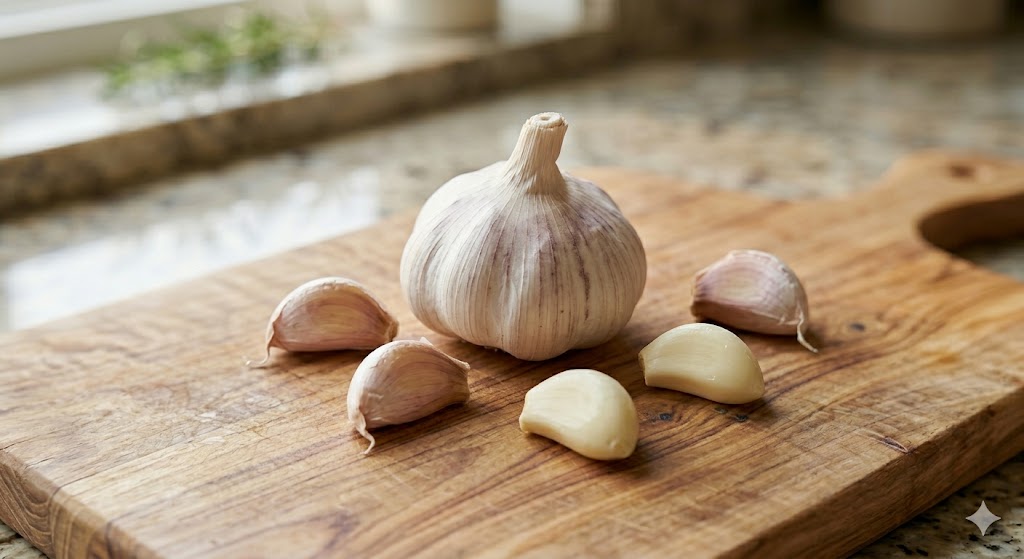
Why AKC and ASPCA discourage it
5x more toxic than onions — ounce for ounce
This is the key fact that makes garlic its own page (not just lumped with onions): AKC explicitly says garlic is FIVE TIMES more toxic to dogs than onions. So while a piece of onion in a soup might not cause symptoms in a big dog, the same gram amount of garlic powder absolutely could. This is why garlic powder in seasoning blends is so dangerous — it's concentrated AND more potent per gram.
- AKC's key 5x quote — the unique cite for the garlic page.
Mechanism: sulfur compounds damage red blood cells → anemia
Same as onions: when garlic is chewed, crushed, or digested, it releases sulfur compounds that cause oxidative damage to a dog's red blood cells. Over time, the cells break apart, leading to anemia. Severe anemia can require blood transfusion. Vets diagnose it by finding damaged red blood cells (Heinz bodies) on a blood smear combined with a recent garlic-exposure history.
- AKC on the sulfur-compound mechanism.
- ASPCA cross-confirmation: the whole allium family causes red blood cell damage.
All forms toxic — especially powder
Raw, cooked, fried, powdered — all toxic. Garlic powder is the biggest practical danger because it's MORE concentrated than fresh garlic and hides in seasoned meats, soups, sauces, pasta dishes, garlic bread, gravies, and a huge range of takeout. The classic emergency: dog gets table scraps from a seasoned dish and the owner doesn't realize there's garlic in it.
- AKC: all forms count, including hidden in cooked foods.
- AKC: powders and soup mixes are the most potent forms.
Dose threshold + small-dog risk
AKC's framing: garlic is NEVER safe to feed intentionally regardless of size. While bigger dogs can tolerate a slightly higher dose, the threshold varies and even small amounts have caused poisoning in dogs of all sizes. For a 10-lb dog, a single clove can matter; for a 60-lb dog, table scraps with garlic seasoning daily can cause cumulative damage.
- AKC: never safe to feed intentionally regardless of size.
Read about the rest of the allium family
Garlic is part of the allium family along with onions, chives, leeks, and shallots — all toxic to dogs through the same mechanism. If your dog ate garlic, also read our onions page (the family is treated the same way). For safer flavoring/vegetables to share with your dog: plain pumpkin, carrots, green beans, cucumber — all have their own per-dog pages on our food checker.
- Onions are also toxic — same allium family, similar mechanism.
If your dog ate garlic — what to watch for
Watch for these symptoms over the next 1–3 days:
Dogs may have mild stomach upset, like vomiting or diarrhea, within a few hours of eating garlic. The more serious signs of garlic poisoning, like pale gums, weakness, fast breathing, or dark urine, usually develop two to five days later as the damaged red blood cells break down.
🚨 If this happened — act now
If your dog ate garlic in any amount, call ASPCA Animal Poison Control (1-888-426-4435) immediately AND get to your vet — both, not either. The crucial point: DON'T WAIT for symptoms. The serious garlic poisoning signs (pale gums, weakness, dark urine) typically develop 2-5 DAYS after ingestion as the damaged red blood cells break down — by then anemia is already happening. Tell ASPCA + the vet: FORM (fresh clove vs powder vs cooked-into-dish), APPROXIMATE amount, your dog's WEIGHT, and when it happened. A consultation fee may apply on the ASPCA call.
- Tell the vet exactly what FORM was eaten — fresh garlic vs. garlic powder vs. cooked into a dish. AKC notes powders and seasoning mixes are MORE concentrated per gram than fresh garlic, so the form changes the dose math the vet needs to run.
- Monitor for several DAYS even after vet care. The serious garlic-poisoning symptoms (anemia) typically develop 2-5 days after ingestion, not immediately — a dog who seems fine the first day can still develop pale gums, weakness, fast breathing, or reddish/dark urine later. (This timing is in the symptoms list above.)
- ASPCA Animal Poison Control runs a 24/7 hotline — a consultation fee may apply, but they're the standard reference for what's toxic and how serious it is.
💡 What next?
Common questions
- How toxic is garlic to dogs?
- Very. AKC: garlic is FIVE TIMES more toxic than onions, ounce for ounce. The same mechanism (sulfur compounds damage red blood cells → anemia) but much more concentrated. Powder is even more potent than fresh garlic. No amount is safe to feed intentionally.
- What about garlic supplements for fleas?
- No. AKC's article directly addresses the flea-deterrent myth: 'I do not recommend using garlic as a flea deterrent in any form.' Use a proper vet-prescribed flea preventive — not garlic. The flea-deterrent claim is folklore, not evidence-based, and feeding garlic causes real harm.
- My dog ate a small amount of garlic — should I worry?
- Call ASPCA Animal Poison Control (1-888-426-4435) AND your vet to be safe. AKC: even relatively small amounts of garlic have caused poisoning in dogs of all sizes, and the threshold varies. The 2-5 day delayed symptoms (anemia) mean you can't wait-and-see — early vet intervention makes a big difference.
- What are the symptoms of garlic poisoning in dogs?
- Early (within hours): mild stomach upset — vomiting or diarrhea. Late (2-5 days): pale gums, weakness, fast breathing, dark or reddish urine as the damaged red blood cells break down. The delayed timeline is what makes garlic poisoning so dangerous — owners often think their dog is fine until anemia develops days later.
- Why is garlic more toxic than onions if they're related?
- Both are alliums and work the same way (sulfur compounds → red blood cell damage), but garlic is 5x more concentrated per gram. AKC: 15-30 grams of raw onion causes symptoms in dogs; the equivalent amount of garlic would be 3-6 grams (about 1-2 cloves). Garlic powder concentrates it even further.
- What if my dog ate garlic bread or pizza?
- Treat it as a vet call. Cooked garlic in seasoned food (garlic bread, pizza, pasta sauce, garlic mashed potatoes, garlic-seasoned chicken) is one of the most common ways dogs get garlic poisoning. The cooking doesn't reduce toxicity — it actually concentrates it. Call ASPCA + your vet with the type of dish and how much your dog ate.