Can Dogs Eat Onions?
❌ AKC and ASPCA advise against feeding onions to dogs
No — dogs should never eat onions in any form. The whole allium family (onions, garlic, leeks, chives, shallots) is toxic to dogs. The toxic compound (N-propyl disulfide) damages red blood cells and causes anemia. All forms count — raw, cooked, fried, powdered. Onion and garlic powders are even more concentrated than fresh, and they hide in everything from soups to baby food.
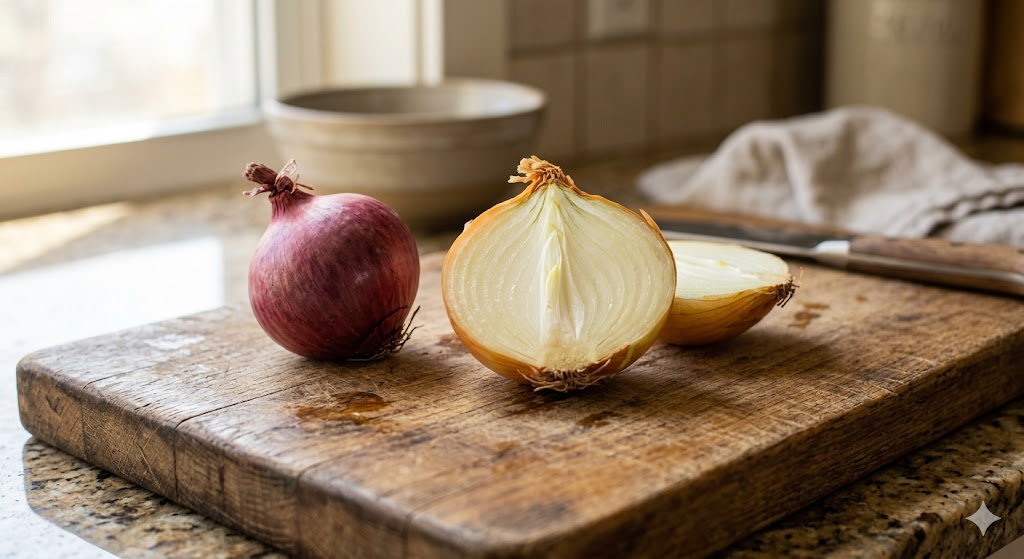
Why AKC and ASPCA discourage it
All forms toxic — and the whole allium family
It's not just raw onions. Cooked, fried, and powdered are all toxic — and the same applies to garlic, leeks, chives, and shallots (the rest of the allium family). The biggest practical danger is hidden onion or garlic powder: it's in soups, sauces, broths, gravies, seasoned meats, baby food, and many takeout dishes. Dogs that 'just had a tiny taste of leftovers' are often the ones who end up at the vet.
- AKC: all forms count, and the whole allium family is toxic.
- Onion and garlic POWDERS are more concentrated than fresh and hide in many foods.
- Garlic is part of the allium family but is about five times more toxic to dogs than onions.
The toxic mechanism — red blood cell damage
Onions contain N-propyl disulfide. It damages your dog's red blood cells, which causes hemolytic anemia — the body breaks down its own red blood cells faster than it can make new ones. Severe anemia is life-threatening and requires blood transfusion. Vets diagnose it on a blood smear by looking for damaged red blood cells (Heinz bodies) plus a recent history of onion exposure.
- AKC: N-propyl disulfide damages red blood cells, causing anemia.
- ASPCA: the allium family as a whole causes red blood cell damage and anemia.
Dose threshold — small amounts add up
AKC's dose threshold: about 100 grams of onion per 20 kg of dog (about the size of a medium onion for a 44-lb dog) is enough to cause toxic effects. That sounds like a lot, but garlic is 5× more potent, and onion/garlic powder is more concentrated than fresh. Repeated small exposures (like leftover sauce on rice every day) can also cause cumulative damage. The safe rule is zero.
- AKC's dose threshold for toxic effects.
- AKC: onion and garlic poisoning may have delayed symptoms — monitor for several days.
Safer vegetable options for your dog
Plenty of vegetables dogs can safely enjoy — carrots, pumpkin, sweet potato, green beans, and more. Skip anything cooked with onion, garlic, or seasoning. Plain is the rule. Our food checker has the per-dog amount worked out for each safe vegetable.
- Carrots are a safe, low-calorie vegetable treat.
If your dog ate onions — what to watch for
Watch for these symptoms over the next 1–3 days:
If you think your dog may have eaten onions, look out for symptoms of anemia, including: Lethargy, Weakness, Decreased appetite, Pale gums, Fainting, Reddish urine. Additional signs of onion toxicity in dogs include vomiting, elevated heart rate, and panting.
🚨 If this happened — act now
If your dog ate onions, garlic, or anything from the allium family, call ASPCA Animal Poison Control (1-888-426-4435) immediately AND get to your vet — both, not either. ASPCA's 24/7 veterinary toxicologists triage how serious it is based on what was eaten + amount + your dog's weight, and they open a case file your local vet uses during treatment (most general-practice vets aren't toxicology specialists, and ASPCA is). Your vet handles the physical care and may run blood work to check for Heinz bodies on a smear. Symptoms can be delayed by 1–3 days, so monitor for several days even after both calls. A consultation fee may apply on the ASPCA call.
- Watch for several DAYS — onion and garlic poisoning may have delayed symptoms, so a dog who seems fine the first day can still develop anemia later.
- ASPCA Animal Poison Control runs a 24/7 hotline — a consultation fee may apply, but they're the standard reference for what's toxic and how serious it is.
💡 What next?
Common questions
- Can dogs eat onions?
- No — AKC: 'Dogs should never eat onions in any form.' All forms count: raw, cooked, fried, and powdered. Onion is part of the allium family along with garlic, leeks, chives, and shallots — all toxic to dogs.
- What about garlic, leeks, chives, and shallots?
- All toxic. They're all part of the allium family. AKC notes that garlic is actually about five times MORE toxic to dogs than the rest of the allium family. Don't feed any of them — and watch out for garlic powder hidden in human food.
- Is cooked or fried onion safer than raw?
- No — AKC explicitly says 'whether raw or cooked, fried or powdered.' Cooking doesn't destroy the toxic compound. Onion powder is actually MORE concentrated than fresh onion, so a small amount of powder in a sauce can deliver more toxin than a slice of fresh onion.
- Why are onions toxic to dogs?
- Onions contain N-propyl disulfide, which damages red blood cells. This causes hemolytic anemia — the dog's body breaks down its red blood cells faster than it can make new ones. Severe cases can require blood transfusion. Vets diagnose it by finding damaged red blood cells (Heinz bodies) on a blood smear.
- My dog ate a tiny piece of onion — should I worry?
- Call ASPCA Poison Control (1-888-426-4435) AND your vet to be safe — both at once. ASPCA's toxicologists triage urgency 24/7 based on dose and your dog's size; your vet handles the physical care if needed. AKC's dose threshold is about 100 g of onion per 20 kg of dog (medium onion for a 44-lb dog), so a tiny piece may not be enough on its own — but it depends on your dog's weight, how much was eaten, and whether there's been repeated exposure (a few bites of seasoned leftovers daily can add up).
- What are the symptoms of onion poisoning?
- AKC's list: lethargy, weakness, decreased appetite, pale gums, fainting, reddish urine. Also vomiting, elevated heart rate, and panting. Symptoms can be DELAYED by 1–3 days because it takes time for the anemia to develop — so monitor for several days even if your dog seems fine immediately after.
- How much onion is toxic to a dog?
- AKC: about 100 grams of onion per 20 kg of body weight is enough to cause toxic effects (roughly a medium onion for a 44-lb dog). Garlic is 5× more potent, so much less garlic produces the same damage. Repeated small exposures can also cause cumulative damage — the safe rule is zero allium foods.
- Is onion powder more dangerous than fresh onion?
- Yes — onion (and garlic) powder is more concentrated per gram than fresh. AKC explicitly notes they're 'even more potent than fresh onions.' This is the bigger practical danger: powdered alliums hide in seasoning blends, soups, sauces, gravies, baby food, savory snacks, and most takeout dishes. Always check the ingredient list before sharing human food.
- Can dogs eat baby food with onion powder?
- Many baby foods contain onion or garlic powder for flavor — check the ingredient list. AKC specifically calls out baby food as one of the surprising places allium powders hide. If you're using baby food as a pill-vehicle or a treat for your dog, pick brands with NO onion, garlic, or other allium ingredients.