Can Dogs Eat Raw Eggs?
❌ AVMA and AKC advise against feeding raw eggs to dogs
Major vet organizations (AVMA, AKC, PetMD) advise against feeding raw eggs to dogs. Two issues: Salmonella from the raw egg, and avidin — a protein in raw egg whites that binds biotin (a B vitamin) and can interfere with absorption. Cooking the egg through eliminates both problems.
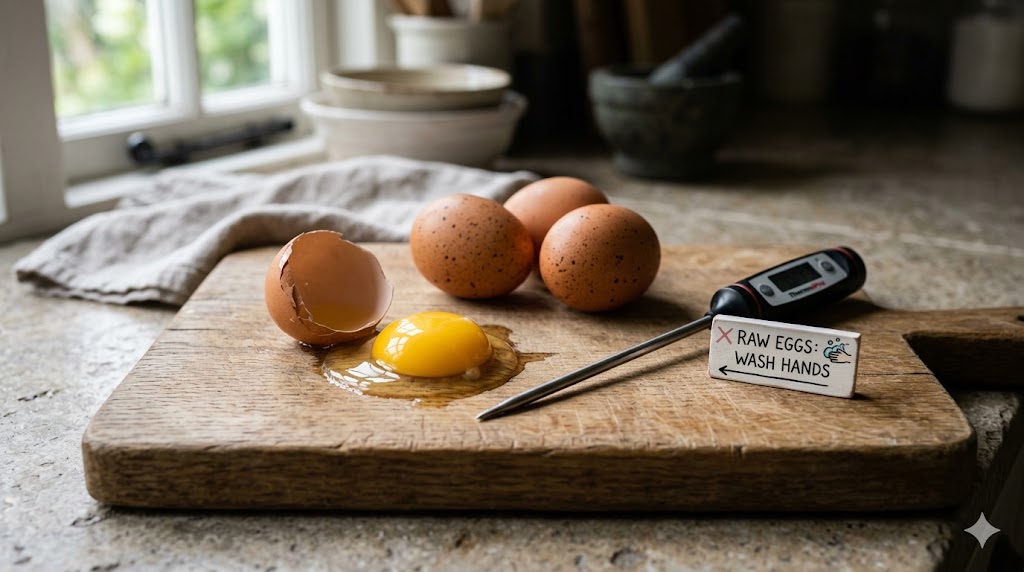
Why AVMA and AKC discourage it
Salmonella and other bacteria
Raw eggs can carry Salmonella inside the shell (not just on it), which can cause vomiting, diarrhea, and dehydration in your dog. AKC, PetMD, and AVMA all flag the same risk — raw eggs are one of the classic Salmonella foods, alongside raw poultry and raw meat.
- PetMD: Salmonella from raw eggs causes vomiting, diarrhea, dehydration.
- AKC: dogs can pick up Salmonella from raw eggs.
- AVMA: raw or undercooked animal proteins (eggs included) may carry a range of pathogens.
Avidin in raw egg whites blocks biotin (a B vitamin)
The unique-to-eggs risk. Raw egg whites contain avidin — a protein that binds to biotin (a B vitamin important for skin, coat, and metabolism) and prevents your dog's body from absorbing it. Fed regularly, raw eggs can cause a biotin deficiency. The fix is simple: cooking denatures the avidin, so cooked egg whites have none of this problem.
- PetMD (clearest): avidin binds biotin; cooking neutralizes it.
- AKC: avidin in egg whites blocks biotin absorption.
Risk to you and your family
Same household pattern as any raw animal product: a dog that ate a raw egg can shed Salmonella in saliva and stool for days, and the same bacteria can come back to you (handling the bowl, the kitchen counter, a face lick). The risk is biggest for kids, older adults, pregnant women, and anyone immunocompromised.
- AVMA: handlers of contaminated raw pet food are at risk.
- AKC: even a symptom-free dog can shed bacteria to people.
Cooked eggs — same nutrition, none of the risks
Both issues with raw eggs (Salmonella + avidin) disappear when you cook the egg through. Boiled, scrambled, or poached all work — plain, no oil or seasoning. Our cooked-eggs page has the per-dog amount worked out and the prep instructions.
- PetMD: cooked eggs are fine; raw should be avoided.
- AKC: most vets recommend cooking eggs fully.
If your dog ate raw eggs — what to watch for
Watch for these symptoms over the next 1–3 days:
Raw eggs can carry salmonella, a bacteria that may cause illness in dogs, leading to vomiting, diarrhea, and dehydration.
Most healthy adult dogs that grab a single raw egg off the counter pass it without incident — the more typical pattern is vomiting/diarrhea over the next 1–3 days from the Salmonella, or no symptoms at all. Call your vet sooner — not later — if your dog is a puppy, a senior, pregnant, or has any immune condition; if vomiting/diarrhea is severe or has blood; or if your dog is also showing lethargy.
- Don't kiss your dog around the mouth or let them lick your face — especially right after they've eaten the raw egg, because that's when Salmonella spreads most.
- Wash your hands after touching the dog or the dog's bowl. If your dog managed to lick your face, wash your face too.
💡 What next?
Common questions
- Is it ever OK to feed raw eggs to a dog?
- Major vet organizations (AVMA, AKC, PetMD) consistently advise against it. The two issues are Salmonella (in the egg, not just on the shell) and avidin in the raw white (which binds biotin, a B vitamin). Cooking the egg through eliminates both. Raw-feeding communities will tell you raw eggs are fine — that's a different risk philosophy from what authorities recommend for the average pet dog.
- What about cracking a raw egg over my dog's kibble?
- Same risks as feeding a whole raw egg — Salmonella and avidin. A 30-second scramble (plain, no butter or oil) gives you the protein boost without either problem.
- Raw vs cooked eggs — what's actually different?
- Two things. (1) Salmonella — heat kills it. (2) Avidin — a protein in raw egg whites that binds biotin (a B vitamin). Cooking denatures the avidin so it stops blocking biotin. Both issues disappear when the egg is cooked through.
- Can my dog eat raw egg yolks (without the white)?
- Cracking just the yolk does sidestep the avidin issue (avidin is in the white). But Salmonella can be inside the egg, not just on the shell, so the bacterial risk doesn't go away. The cleaner answer is to cook the whole egg — both halves of the issue gone, no separating needed.
- Some raw feeders say raw eggs are totally fine. Who's right?
- The raw-feeding community does feed raw eggs, often citing the wild-canid argument. That's a different risk philosophy from what AVMA, AKC, and PetMD recommend for the average pet dog. The vet authorities' position is consistent and we report what they say: raw eggs carry Salmonella and avidin/biotin risk; cooking eliminates both.
- My dog ate a raw egg by accident — should I panic?
- Most healthy adult dogs that grab a single raw egg end up fine. Watch for vomiting, diarrhea, or lethargy over the next 24–72 hours. Call your vet if symptoms appear — especially if your dog is a puppy, a senior, pregnant, or has any immune condition. Wash your hands and any surface the egg or shell touched (counter, floor, the dog's bowl); Salmonella from the shell spreads easily.