Can Dogs Eat Raw Chicken Bones?
❌ PetMD and AKC advise against feeding raw chicken bones to dogs
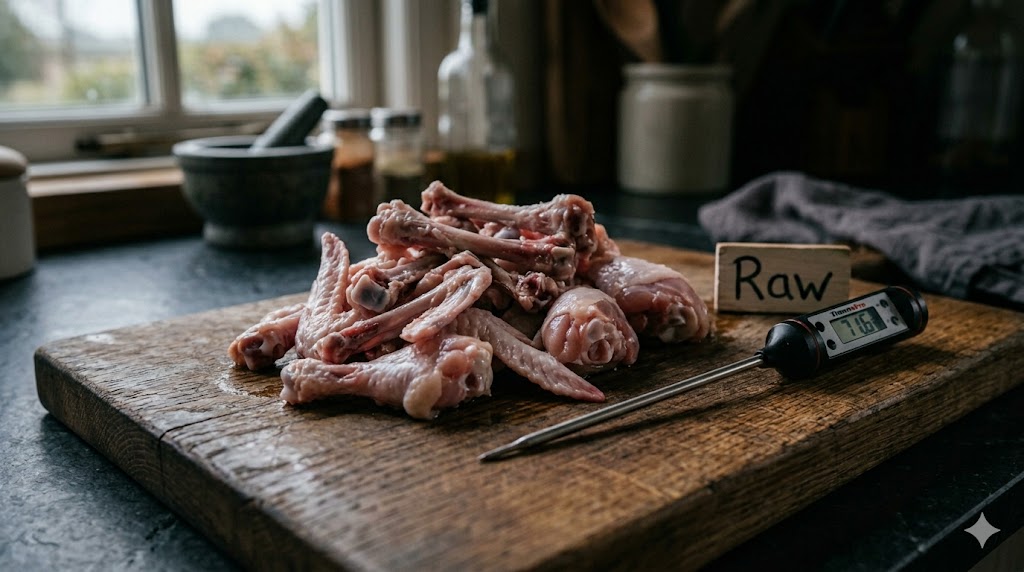
Most vets advise against giving dogs chicken bones of any kind. Raw chicken bones are still hollow — they can splinter into sharp pieces, choke your dog, crack a tooth, or block the gut. The raw meat on them also carries the same Salmonella, Campylobacter, and E. coli that make raw chicken risky. Cooked chicken bones are even more dangerous.
Why PetMD and AKC discourage it
Sharp pieces, choking, dental damage, and gut blockage
Chicken bones are hollow — even raw ones can break off into sharp pieces if your dog chews aggressively. The pieces can lodge in the throat (choking), crack a tooth, or pass partway down and block the intestines. Aggressive chewers and bigger dogs that swallow chunks whole are at the highest risk.
- PetMD: chicken bones are hollow, so they break and splinter more easily than other bones.
Cooked chicken bones are even worse — never feed them
If you only remember one thing: cooked chicken bones are far more dangerous than raw. Cooking dries the bone out and makes it brittle, so it shatters into sharp shards that can choke a dog or perforate the throat or intestines. This applies to roasted, baked, fried, and grilled chicken bones from any meal.
- AKC walks through the full chain — cooked bones splinter, then can choke the dog, puncture the gut, or lodge in the throat, and the outcome can be fatal.
Bacterial contamination on the raw meat
Raw chicken bones still carry whatever Salmonella, Campylobacter, E. coli, and Listeria the raw meat does — and those bacteria can spread from the dog (and the bowl, and the floor) to the people in your home. We cover the full bacterial argument on our raw chicken page; the bones inherit all of it.
- AVMA: raw or undercooked animal-sourced proteins (poultry included) are discouraged.
- FDA: raw pet food is more likely to be contaminated than other pet food categories.
Cooked, boneless chicken — plus dental chews instead of bones
Two safer paths. If you want your dog to have chicken: cook it through (165 °F / 74 °C) and remove the bones — our cooked-chicken page has the per-dog amount worked out. If your dog mostly wants something to chew, vets recommend purpose-made dental chews over any kind of bone.
- FDA: cooking eliminates the bacteria the bones carry.
- PetMD: dental chews are the recommended chew alternative.
If your dog ate raw chicken bones — what to watch for
Watch for these symptoms over the next 1–3 days:
If you notice your dog is lethargic, constipated, straining to defecate, or has bloody stool, is vomiting, appears bloated in the abdomen, is not eating or is generally uncomfortable, you're going to want to seek veterinary attention right away. Check your dog's stool daily to see if you can see the bone fragments passing through.
Many dogs that pick up a single raw chicken bone pass it without incident. But the failure mode here is fast and severe (perforation, blockage), so don't watch and wait if anything looks off. Call your vet straight away if your dog is choking now, swallowed a large piece whole, or shows any of the AKC symptoms above — especially bloody stool, vomiting, bloating, or refusal to eat.
- Wash your hands and anything that touched the raw bones (counter, plate, the dog's bowl). The same bacteria from raw chicken meat are on the bones.
💡 What next?
Common questions
- Are raw chicken bones safe for dogs?
- No — most vets advise against any chicken bones (raw or cooked). Raw bones are still hollow and can splinter into sharp pieces, choke your dog, crack a tooth, or block the gut. The raw meat on them also carries the same bacteria as raw chicken meat.
- Raw vs cooked chicken bones — what's the difference?
- Cooked chicken bones are far more dangerous. Cooking dries the bone out and makes it brittle, so it shatters into sharp shards that can puncture the throat or intestines — potentially fatal. Raw bones are less likely to splinter than cooked, but they still can — and they add the bacterial-contamination problem. Bottom line: skip both.
- My dog just ate a raw chicken bone — what should I do?
- Many dogs pass a single raw bone without trouble, but the failure mode (perforation, blockage) is serious and fast. Watch for the next 24–72 hours for lethargy, vomiting, bloody stool, bloating, constipation, or refusal to eat. Call your vet immediately if any of those appear — and call right away (don't wait) if your dog swallowed a large piece whole, is choking, or shows distress.
- Can I give my dog raw chicken drumsticks or thighs?
- No — same problems as any raw chicken bone (splintering, choking, gut perforation, plus bacterial contamination). Drumsticks and thighs are bigger, so the blockage risk goes up. Skip them.
- Do raw chicken bones really splinter?
- Raw chicken bones are softer and less likely to splinter than cooked ones, but yes — they can and do, especially when an aggressive chewer crunches them or a bigger dog snaps one in half. The cracked pieces are sharp enough to cause real damage.
- What can my dog chew on instead?
- Vets typically recommend purpose-made dental chews — they're designed to be safer on teeth and easier on the gut than any real bone. Avoid all bones (any species, raw or cooked); the risk-reward is bad. The Veterinary Oral Health Council (VOHC) seal is a useful filter when picking a brand; your vet can suggest specifics for your dog.