Can Dogs Eat Raisins?
❌ AKC and ASPCA advise against feeding raisins to dogs
No — raisins are extremely toxic to dogs. They're just dried grapes, and they cause the same acute kidney failure grapes do — except more concentrated per piece, so even smaller amounts matter. AKC's dose threshold: one grape or raisin per 10 pounds of body weight is enough to cause renal failure in some dogs. There's no safe amount. If your dog ate ANY raisins — including a single oatmeal raisin cookie, a bite of raisin bread, or trail mix — call your vet or ASPCA Animal Poison Control (1-888-426-4435) immediately. Don't wait for symptoms.
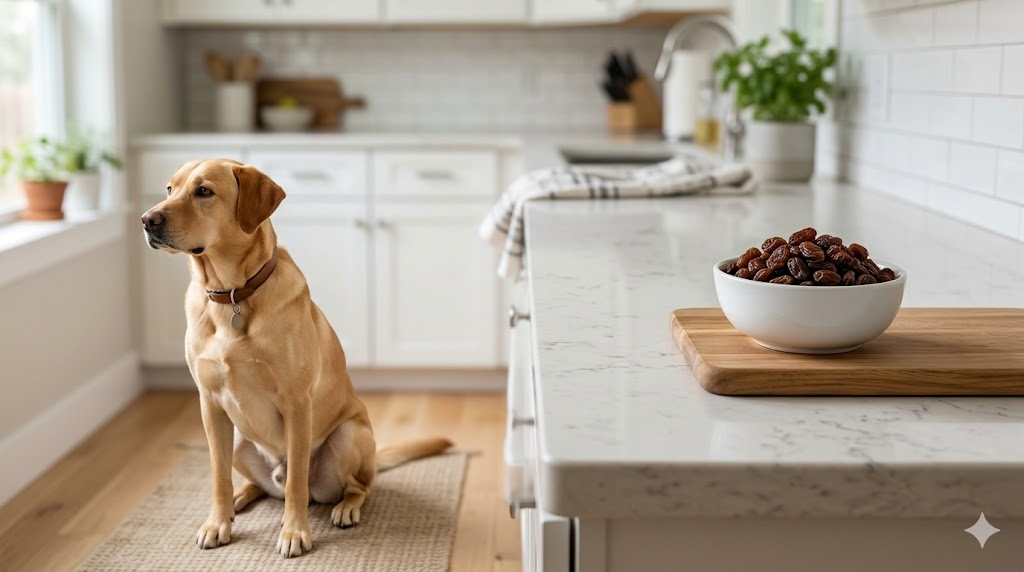
Why AKC and ASPCA discourage it
Kidney failure from a tiny amount — and raisins are more concentrated than grapes
Raisins are dried grapes, so the toxic compound is packed into a much smaller piece. AKC's threshold — one grape or raisin per 10 pounds of body weight — applies to both, which means a 20-lb dog hitting that threshold needs only two raisins. Some dogs are far more sensitive than others, and there's no way to tell which dogs are vulnerable. Treat any raisin ingestion as a potential emergency.
- AKC's dose threshold: one grape or raisin per 10 pounds of body weight can cause renal failure.
- ASPCA: tartaric acid is the leading recent hypothesis for why grapes and raisins cause kidney damage in dogs.
Raisins hide in baked goods, cereals, and trail mix
This is the part that catches owners off guard: raisins are an ingredient in things you might not think of as 'raisin' foods — oatmeal raisin cookies, raisin bread, granola bars, trail mix, raisin bran cereal, scones, hot cross buns, fruitcakes. Currants and sultanas are also dried grapes and just as toxic. If you're not sure whether a baked good contains raisins, treat it as if it does until you've checked the label.
- AKC: raisins hide inside many foods you wouldn't think of — desserts, breads, pastries.
Symptoms take 6–12 hours to show, kidney damage 24–72 hours
Early symptoms can look like a simple upset stomach — vomiting, diarrhea, loss of appetite — and they don't show up for six to twelve hours. The kidney injury itself often only appears on blood work over the next one to three days. Don't wait for severe symptoms; by the time grape or raisin poisoning is obvious, the kidneys are already being damaged. Vets want to start treatment early because once kidney function drops, the outcome is much worse.
- AKC: symptoms can take six to 12 hours to appear.
- AKC: kidney injury can show up on blood work over the next 24–72 hours.
Blueberries — the safer fruit snack
If your dog likes a tiny, sweet, chewable treat, blueberries are the closest safe substitute for raisins — same one-piece-at-a-time format, low in sugar, and authorities back them as a fine occasional snack. (For something dried, watch out: most 'dried fruit' aisles also sell raisins, sultanas, and currants. Stick with fresh berries instead, and check our food checker for the per-dog amount.)
- AKC: blueberries are a great low-calorie alternative.
- AKC's vet on which fruits to pick first when looking for a low-sugar alternative.
If your dog ate raisins — what to watch for
Watch for these symptoms over the next 1–3 days:
Other symptoms of grape-related poisoning include: Dehydration, Tremors, Abdominal pain, Lethargy, Polydipsia (extreme thirst), Little or no urine output, Behavioral changes indicating distress
🚨 If this happened — act now
If your dog ate any raisins — even one cookie, one bite of raisin bread, or a handful of trail mix — call ASPCA Animal Poison Control (1-888-426-4435) immediately AND get to your vet. Both, not either. ASPCA's 24/7 veterinary toxicologists tell you whether to induce vomiting at home, how urgent it is for your dog's size, and they open a case file your local vet uses during treatment (most general-practice vets aren't toxicology specialists, and ASPCA is). Your vet handles the physical care: induced vomiting if it was within the last few hours, activated charcoal, and IV fluids to protect the kidneys. Bring or describe what was eaten — type (raisins, oatmeal raisin cookies, raisin bread), rough amount, and when. A consultation fee may apply on the ASPCA call. Don't wait for symptoms; by the time raisin poisoning is obvious, kidney damage is already happening.
- Watch for early signs that look like a simple upset stomach — vomiting, diarrhea, or loss of appetite — they can be the first signal.
- ASPCA Animal Poison Control runs a 24/7 hotline — a consultation fee may apply, but they're the standard reference for what's toxic and how serious it is.
💡 What next?
Common questions
- How many raisins are toxic to a dog?
- AKC's threshold is one grape or raisin per 10 pounds of body weight — enough to cause renal failure in some dogs. That means about two raisins for a 20-lb dog, three for a 30-lb dog. But raisins are dried grapes, so each raisin is more concentrated than each grape — and some dogs are far more sensitive than others. There's no 'safe' amount; treat any raisin ingestion as a potential emergency and call ASPCA Animal Poison Control (1-888-426-4435).
- My dog ate one raisin — should I panic?
- Don't panic, but don't wait either. Call ASPCA Animal Poison Control (1-888-426-4435) AND your vet right now, both at once. ASPCA's toxicologists triage urgency 24/7 and tell you whether to induce vomiting at home; your vet handles the physical treatment. For very small dogs, even one raisin can matter — AKC's threshold is one per 10 lb of body weight. Vets can induce vomiting if it was recent (within roughly two to three hours) and start IV fluids if needed. Treatment works best when started early.
- What's in grapes and raisins that's toxic to dogs?
- The full answer is: nobody is 100% sure yet. AKC says the exact compound that causes toxicity is still unknown. ASPCA notes the leading recent hypothesis is tartaric acid — dogs aren't able to process it, and exposure can lead to kidney damage. Because the mechanism isn't fully nailed down, vets treat ALL grape and raisin ingestion as potentially serious regardless of how much was eaten.
- My dog ate an oatmeal raisin cookie — what do I do?
- Treat it as a raisin ingestion. Call ASPCA Animal Poison Control (1-888-426-4435) AND your vet immediately and tell them what kind of cookie, roughly how big, and when your dog ate it. AKC specifically warns that raisins hide in baked goods like bread and pastries, and the same dose threshold applies whether the raisins came loose or baked into a cookie. Don't wait to see if symptoms show — by the time they do, kidney damage is already starting.
- My dog ate raisins but seems fine — does that mean we're okay?
- No — and this is the most dangerous misconception. Symptoms of raisin poisoning take six to 12 hours to develop, and the kidney injury itself often only shows up on blood work over the next 24 to 72 hours. A dog who 'seems fine' two hours after eating raisins can still develop kidney failure that night or the next day. Call ASPCA Animal Poison Control (1-888-426-4435) and your vet now, while there's still time for vomiting induction and IV fluids to protect the kidneys.
- Are sultanas and currants as toxic as raisins?
- Yes. Sultanas, golden raisins, currants (the small dried grape kind — Zante currants, not blackcurrants the berry), and raisins are all dried grapes and all carry the same kidney-failure risk. Watch out for them in scones, hot cross buns, fruitcake, granola, raisin bread, and trail mix. The AKC dose threshold of one per 10 lb of body weight applies to all of them.
- What about grape juice, wine, or jelly?
- Treat any product made from grapes as potentially toxic. ASPCA Animal Poison Control (1-888-426-4435) can tell you in minutes whether the specific product is a concern — useful when you're not sure if a baked good or trail mix contained raisins. Don't try to reason it out by yourself; the toxic dose is small and the mechanism is still being studied.