Can Dogs Eat Pistachios?
❌ AKC and PetMD advise against feeding pistachios to dogs
No — don't feed pistachios to your dog. AKC is direct: "For your dog's safety, it's best to avoid feeding them pistachios." They aren't outright toxic the way grapes or chocolate are, so a stray plain shelled kernel off the floor isn't an emergency, but the nut is high in fat and salt, the shells are a choking and intestinal-blockage risk, and mold on pistachio shells can produce aflatoxin — which is dangerous for dogs. If your dog grabbed a few plain ones, watch them; if they ate a handful, the shells, or any salted/flavored kind, call your vet.
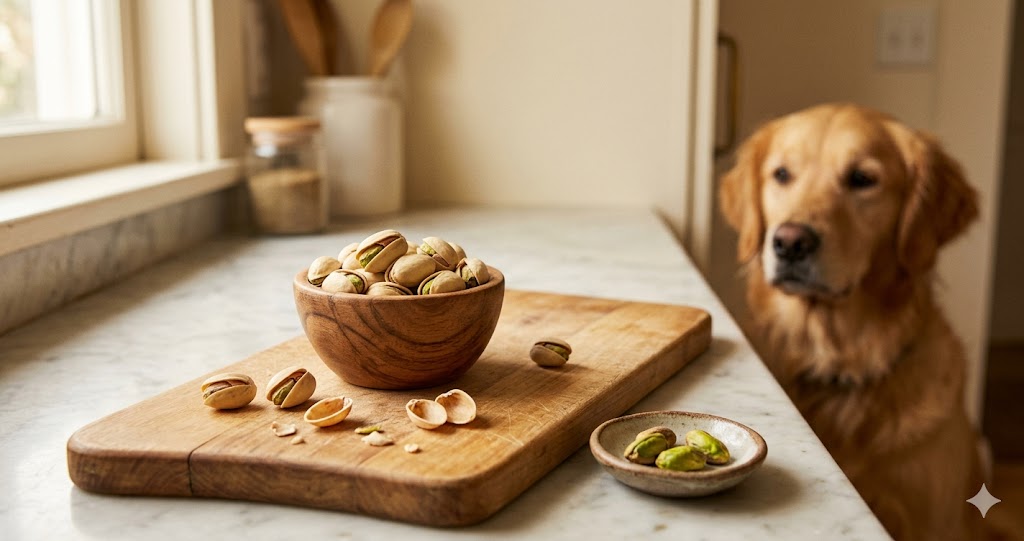
Why AKC and PetMD discourage it
High fat — pancreatitis risk
Pistachios are a fatty nut, and high-fat treats are a documented pancreatitis trigger in dogs. AKC names the risk directly: fatty, salty snacks can lead to pancreatitis. Once a dog has had pancreatitis, even a small repeat exposure can re-trigger it — so dogs with a history should skip pistachios entirely.
- AKC: fatty, salty snacks can lead to pancreatitis in dogs.
Shells choke and block the gut
The biggest acute risk is the shell. AKC: a dog trying to swallow a pistachio shell can choke or lodge it in the throat. PetMD adds that pistachio shells — and the kernels themselves in large amounts — can cause an intestinal blockage further down. This is the part that hits small dogs hardest, where one shell can be a serious problem.
- AKC: pistachio shells can choke a dog or get lodged in the throat.
- PetMD: pistachios with or without the shell can cause an intestinal blockage.
Aflatoxin from mold on the shells
AKC flags a more specific pistachio risk: the mold that naturally grows on pistachio shells can produce aflatoxin, a toxin that weakens dogs, causes gastrointestinal upset, and in serious cases can trigger seizures. Commercially packaged pistachios from a reputable brand are screened for it, but old, discolored, or moldy-smelling nuts should always go in the trash, not the dog bowl.
- AKC: aflatoxin is naturally produced from mold that grows on the shells of nuts.
Salted, flavored, or honey-roasted versions are worse
Most snack-aisle pistachios are heavily salted, and PetMD specifically calls out salt as unhealthy for dogs. Flavored kinds — chili-lime, honey-roasted, garlic — layer on either too much sugar or seasonings that are themselves toxic (garlic, onion). The plain shelled unsalted kernel is the least-bad form, and even that one AKC says to skip.
- PetMD: pistachios are often salted, and salt is unhealthy for dogs to eat regularly.
Better small treat options
If you wanted pistachios as a tiny crunchy treat, a single plain dry-roasted unsalted peanut gets you the same shape without the shell hazard, and a small piece of carrot or apple is genuinely good for your dog. Each one is on our food checker with the per-dog amount worked out from your dog's weight.
- Carrots: low-calorie crunch that's good for teeth.
If your dog ate pistachios — what to watch for
Watch for these symptoms over the next 1–3 days:
If your dog tries to swallow pistachios or their shells, they could become choking hazards and get lodged in your pet's throat.
If your dog grabbed ONE OR TWO plain shelled pistachio kernels: not an emergency. Watch the next 24 hours for vomiting, diarrhea, lethargy, refusing food, or straining without producing — those are the signs of pancreatitis or blockage. For a small dog or puppy, watch closer. If your dog ate the SHELLS, OR a handful, OR any salted/flavored/honey-roasted kind, OR you're seeing symptoms, call your vet or the ASPCA Animal Poison Control hotline (1-888-426-4435) now. A consultation fee may apply on the ASPCA call. Tell them: how many, shelled or in-shell, plain or salted, and your dog's weight.
- ASPCA Animal Poison Control runs a 24/7 hotline — a consultation fee may apply, but they're the standard reference for what's toxic and how serious it is.
💡 What next?
Common questions
- Are pistachios safe for dogs?
- Not recommended. PetMD: "Pistachios are not toxic to dogs, so if your dog eats a few, he should be OK." AKC is stricter: "For your dog's safety, it's best to avoid feeding them pistachios." We follow AKC — the risks (high fat, salt, choking and blockage from shells, aflatoxin from shell mold) outweigh any nutritional upside.
- My dog ate one or two plain pistachios — what should I do?
- Don't panic. Watch them for the next 24 hours for vomiting, diarrhea, lethargy, refusing food, or straining to poop — those are the early signs of either pancreatitis or a blockage. If they ate the shells, a handful, or any salted/flavored kind, call your vet.
- My dog ate pistachio shells — what do I do?
- Watch closely. AKC: pistachio shells can choke a dog or get lodged in the throat, and PetMD warns the shells can also cause an intestinal blockage further down. Symptoms to watch for include vomiting, refusing food, lethargy, or straining to poop. If you see any of those — or if your dog ate a lot of shells, or is a small breed — call your vet now.
- What is aflatoxin and why does it matter for pistachios?
- AKC: "Aflatoxin is naturally produced from mold that grows on the shells of nuts." In dogs it can cause weakness, lethargy, GI upset, and in serious cases seizures. Commercially packaged pistachios from a reputable brand are screened for it, but old, discolored, or moldy-smelling nuts should always go in the trash, not the dog bowl.
- Can pistachios cause pancreatitis in dogs?
- Yes — that's the single biggest medical risk. AKC says directly: "Consumption of fatty, salty snacks can lead to pancreatitis in dogs," and pistachios are both high in fat and usually salted. Dogs that are overweight or have had pancreatitis before should never get pistachios.
- Can dogs eat salted or flavored pistachios?
- No. PetMD: "pistachios are often salted, and salt is unhealthy for dogs to eat regularly." Skip salted, honey-roasted, chili-lime, garlic, or any flavored pistachio — garlic and onion seasonings in particular are toxic to dogs.
- Can puppies eat pistachios?
- No. Puppies are smaller (so the choking and blockage risk from any stray shell is bigger), and their developing system is more sensitive to fat and salt. Stick to puppy food and vet-approved training treats.