Can Dogs Eat Peanut Butter?
⚠️ In moderation — with a couple of catches
Many peanut butters contain xylitol — a sugar substitute that's toxic to dogs. ALWAYS check the label for 'xylitol' or 'birch sugar' before serving.
Yes — most dogs love peanut butter and it's safe in moderation. But there's one critical catch: many 'sugar-free' or 'natural' peanut butters contain xylitol, a sweetener that's deadly to dogs even in tiny amounts. Always check the label before serving. Unsalted, dog-specific, or homemade peanut butter is the safest bet.
How much peanut butter can my dog eat?
A 30-lb adult dog needs about 794 kcal/day, so treats should stay under 79 kcal. That's up to about 2 teaspoons a day as a treat.
A treat limit (10% of daily calories), not a target — assumes an adult dog. Puppies and special diets: use the full calculator.
Peanut butter is calorie-dense (about 30 kcal per teaspoon), so it eats up the treat budget fast. The calculator shows the ceiling — for most dogs that's 1–2 teaspoons a day, max. Use a little for training or stuffing a Kong, not as a daily snack.
Is peanut butter good for dogs?
Peanut butter has protein and healthy fats plus vitamins B and E and niacin — that's why dogs love it and why it works as a high-value training treat. But it's fat-dense, so a little goes a long way calorie-wise.
How to serve peanut butter
- CHECK THE LABEL for xylitol (also written as 'birch sugar') before EVERY new jar. If it's there, do not feed.
- Pick the right kind: unsalted, dog-specific, or homemade peanut butter.
- Homemade peanut butter is the cleanest — no extra sugar or additives.
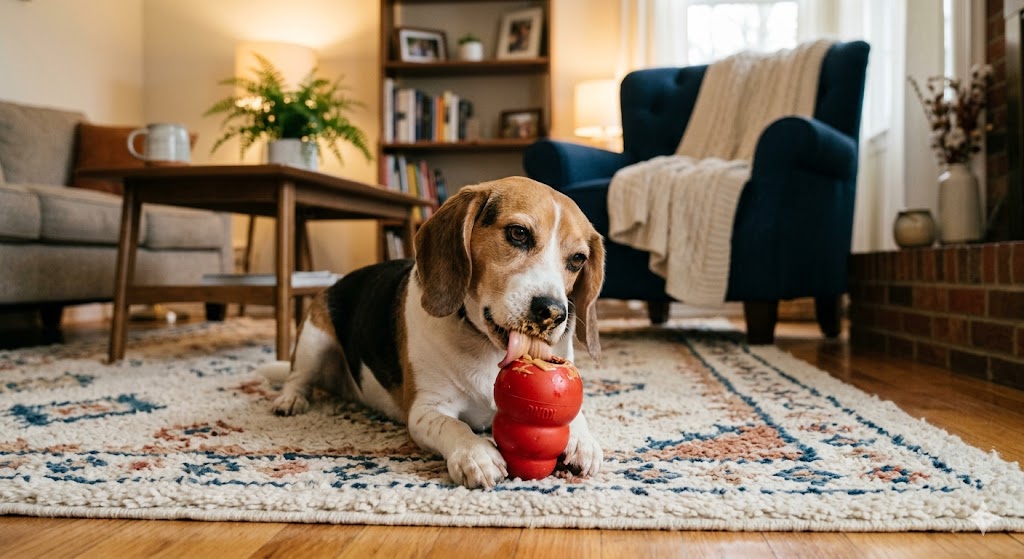
- Spread a small amount inside a Kong-style treat toy for a long-lasting reward — frozen is especially good. A smear from a spoon also works as a quick training treat.
What to avoid
- ANY peanut butter with xylitol (or 'birch sugar') — deadly to dogs even in tiny amounts. Most 'sugar-free' and many 'natural' brands now contain it. Read every label.
- Mechanism of xylitol harm: it triggers a rapid insulin release and dangerous drop in blood sugar.
- High-sugar or salted peanut butters, peanut butter cups (chocolate is toxic), or anything with added oils — skip them. Plain peanut butter only.
- If your dog is overweight or has pancreatitis history, peanut butter's fat content can be a problem — ask your vet.
💡 What next?
Common questions
- Is peanut butter safe for dogs?
- Yes, IF the label is xylitol-free. AKC: 'Yes, dogs can eat peanut butter as long as it is fed in moderation and does not contain xylitol.' Always check the ingredients on every jar — even brands you've used before sometimes reformulate.
- What kind of peanut butter is safe for dogs?
- AKC says the healthiest options are unsalted peanut butter, dog-specific peanut butter, or homemade peanut butter. Avoid anything with xylitol, high sugar, or excess salt. Plain, unsweetened, unflavored is the rule.
- Can dogs eat peanut butter with xylitol?
- NO — xylitol is toxic to dogs and deadly even in tiny amounts. It causes a rapid release of insulin which leads to a sudden, dangerous drop in blood sugar. If your dog ate peanut butter with xylitol, call ASPCA Animal Poison Control (1-888-426-4435) AND your vet immediately — both at once. ASPCA's 24/7 toxicologists triage urgency and tell you whether to induce vomiting at home; your vet handles the physical care. Don't wait for symptoms.
- How much peanut butter can a dog eat?
- Use the calculator above — peanut butter is calorie-dense (about 30 kcal per teaspoon), so most dogs are looking at 1–2 teaspoons a day, max. It's best used as a high-value training treat or stuffed into a Kong, not as a daily snack.
- Why do dogs love peanut butter?
- Protein, healthy fats, vitamins B and E, and niacin — plus the smell and texture. The combination of stickiness (great for licking) and richness makes it irresistible to most dogs. It's why Kong-stuffing with peanut butter is such a classic anti-boredom move.
- Can I put peanut butter in a Kong?
- Yes — it's one of the most popular uses. Spread a small smear inside a Kong-style toy and your dog gets a long-lasting reward (especially when frozen). Just keep the amount within their treat budget and ALWAYS check the jar for xylitol first.