Can Dogs Eat Mushrooms?
⚠️ In moderation — with a couple of catches
Store-bought edible mushrooms served plain are generally OK in small amounts, but ALL wild mushrooms should be treated as potentially toxic — even experienced foragers misidentify them, and species like Amanita phalloides (death cap) can be fatal. The safer rule for owners is no wild mushrooms, period.
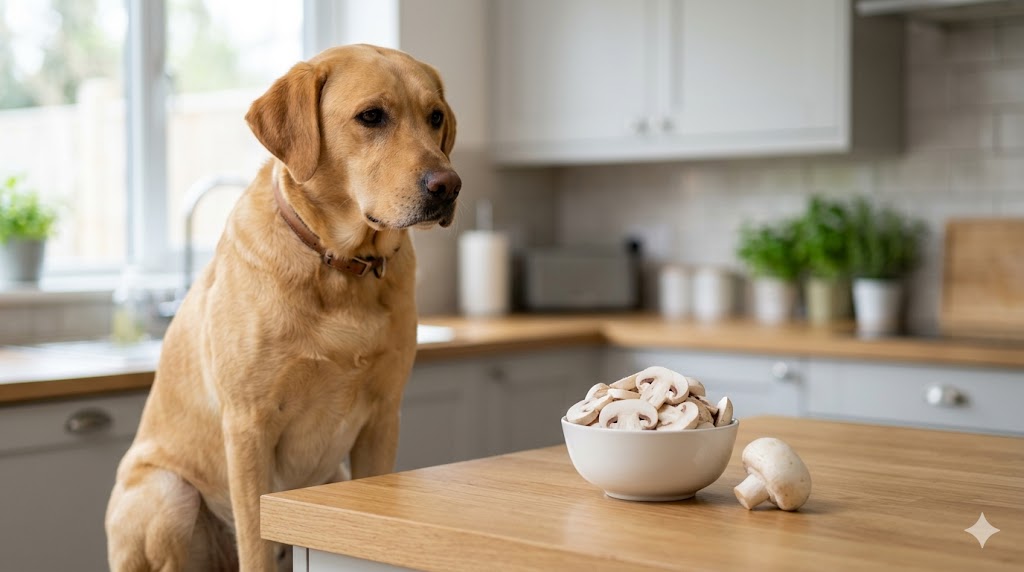
It depends on the mushroom. Plain store-bought edible varieties (white button, cremini, portobello) — cooked and unseasoned — are generally considered safe for dogs as an occasional small piece. Wild mushrooms are a completely different story: AKC says veterinarians recommend treating ALL wild mushrooms as potentially toxic and any ingestion as a veterinary emergency. Most owners can't reliably tell a toxic species from a safe one, so the blanket rule is: no wild mushrooms, ever, no exceptions.
How much mushrooms can my dog eat?
A 30-lb adult dog needs about 794 kcal/day, so treats should stay under 79 kcal. That's up to about 39 mushroom slices a day as a treat.
A treat limit (10% of daily calories), not a target — assumes an adult dog. Puppies and special diets: use the full calculator.
Even for plain store-bought mushrooms, AKC's honest take is that dogs don't need mushrooms in their diet — a carrot stick or apple slice is a safer reward. If you do offer a tiny piece of plain cooked store-bought mushroom as an occasional one-off, keep it well inside the calculator's ceiling and watch for any stomach upset.
Are mushrooms good for dogs?
Plain white, cremini, and portobello mushrooms from the grocery store are low in calories (~22 kcal per 100 g, USDA) and add some fiber and B vitamins — but AKC is clear that dogs don't actually need mushrooms in their diet. The real reason mushrooms are a 'caution' food isn't nutrition, it's that the toxic risk from wild mushrooms is severe and most owners can't reliably tell species apart.
How to serve mushrooms
- Plain, cooked store-bought white/cremini/portobello mushrooms only — no oil, butter, salt, or seasoning.
- Cut into bite-size slices and start with a single small piece the first time — watch for any stomach upset.
- When in doubt, skip mushrooms entirely and offer a carrot stick or apple slice instead — AKC's own suggestion.
What to avoid
- Wild mushrooms of ANY species — even experienced foragers misidentify them. AKC says treat all wild mushrooms as potentially toxic and any ingestion as a veterinary emergency.
- Mushrooms cooked in butter, oil, garlic, onions, or seasoning — the typical way humans cook mushrooms. The seasonings (especially garlic and onions) are a bigger problem than the mushroom itself.
- If you suspect your dog ate a wild mushroom, treat it as an emergency — call your vet, animal poison control, or an emergency veterinary hospital right away.
💡 What next?
Common questions
- Can dogs eat store-bought mushrooms?
- Generally yes, in small amounts and plain. AKC says mushrooms sold in large and chain grocery stores may be generally safe for dogs to eat — that covers the everyday edible varieties like white button, cremini, and portobello. The catch is that we rarely serve mushrooms plain; the sauces, butter, garlic, and onions we typically cook them in are the bigger problem for dogs.
- Can dogs eat wild mushrooms?
- No — never. AKC's position is that veterinarians recommend treating all wild mushrooms as potentially toxic and any ingestion as a veterinary emergency. Even experienced foragers misidentify toxic species; you cannot reliably tell a safe wild mushroom from a deadly one (Amanita phalloides — 'death cap' — is one example AKC specifically names). If your dog ate a wild mushroom, call your vet or animal poison control immediately.
- What are the symptoms of mushroom poisoning in dogs?
- AKC lists vomiting, diarrhea, salivation, weakness, lethargy, staggering gait (ataxia), coma, seizures, liver failure, jaundice, abdominal pain, and death as common symptoms — though the exact signs depend on the species ingested. Some toxic Amanita mushrooms cause a 'false recovery' period where the dog seems fine before liver failure sets in. Treat any suspected wild mushroom ingestion as a veterinary emergency regardless of how your dog looks.
- Are portobello mushrooms safe for dogs?
- Portobello is one of the common edible varieties AKC describes as 'generally safe' when sold from a regular grocery store. The portobello itself is fine in a small plain piece — the issue is that portobellos are usually grilled with oil, salt, butter, or garlic, all of which make the dish unsafe. Plain and unseasoned only.
- Can dogs eat mushrooms cooked in butter, garlic, or onion?
- No. AKC explicitly says oils, butter, seasoning, and ingredients like garlic and onions can be harmful to dogs. Garlic and onions are toxic to dogs in their own right, and the butter and oil add unnecessary fat. If you want to share mushrooms, set aside a plain, unseasoned piece before adding any of that.
- Why is mushroom a 'caution' food when store-bought ones are safe?
- Because most owners can't reliably tell a store-bought edible mushroom from a wild one, and the consequences of getting it wrong with a wild mushroom can be fatal. AKC also points out that dogs don't actually need mushrooms in their diet — a carrot stick or apple slice is a safer treat. The caution verdict reflects 'plain store-bought is OK, but the whole category isn't worth the risk for most owners.'