Can Dogs Eat Grapes?
❌ AKC and ASPCA advise against feeding grapes to dogs
No — grapes (and raisins) are extremely toxic to dogs and can cause acute kidney failure, even in small amounts. AKC: just one grape or raisin per 10 pounds of body weight is enough to cause renal failure in some dogs. There's no safe amount. If your dog ate any grapes or raisins, call your vet or ASPCA Animal Poison Control (1-888-426-4435) immediately — don't wait for symptoms.
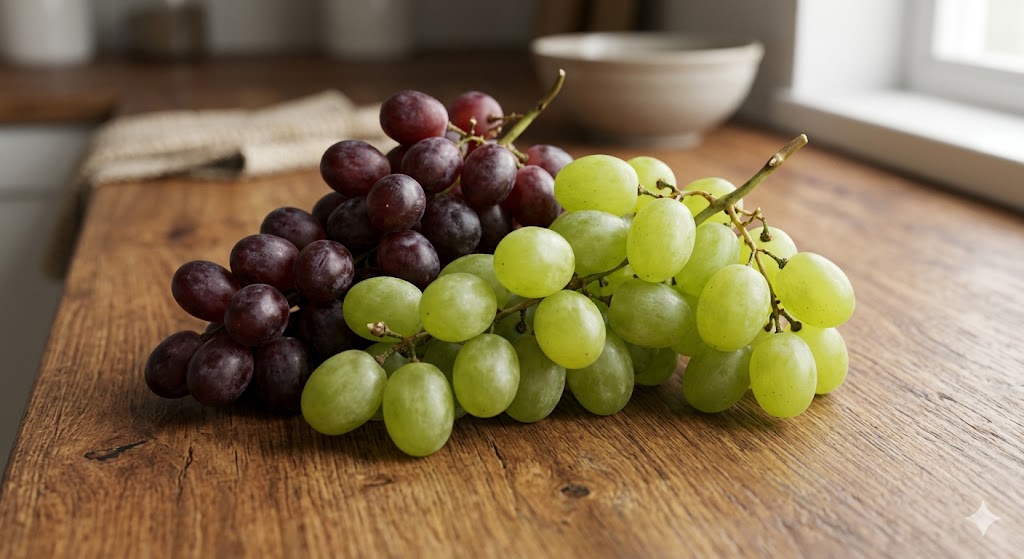
Why AKC and ASPCA discourage it
Kidney failure from a tiny amount
This is the part most owners don't realize: grape toxicity isn't dose-related the way most poisons are. AKC's threshold is just one grape or raisin per 10 pounds of body weight — for a 30-lb dog, that's three grapes. Raisins are more concentrated, so they're even more dangerous per piece. Some dogs are far more sensitive than others; there's no 'safe' amount.
- AKC's dose threshold: one grape or raisin per 10 pounds of body weight can cause renal failure.
- Grapes hide inside many foods you wouldn't think of — desserts, breads, pastries.
The exact toxic compound is still unknown
Vets have known grape toxicity is real for decades, but the exact mechanism is still being studied. AKC's current position: the cause is unknown. ASPCA notes a more recent hypothesis that tartaric acid in grapes may be the culprit, but still hedges with 'speculated.' Practical takeaway: no one knows exactly why some dogs are more vulnerable than others, so the safe rule is zero grapes for any dog.
- AKC: the exact compound that causes toxicity is still unknown.
- ASPCA: tartaric acid is the leading recent hypothesis — but still speculated, not proven.
Kidney damage can be delayed — watch 24 to 72 hours
Early symptoms can look like a simple upset stomach (vomiting, diarrhea, loss of appetite) — which is why owners miss them. The kidney injury itself often shows up on blood work over the next 1–3 days. Don't wait for severe symptoms; if your dog ate any grapes or raisins, treat it as an emergency now.
- AKC: kidney injury can show up on blood work over the next 1–3 days.
Safer fruit options for your dog
There are plenty of fruits dogs can safely enjoy as treats — blueberries, apples (no seeds or core), strawberries, watermelon (no rind or seeds), bananas, and more. Each one has its own per-dog amount worked out from your dog's weight on our food checker.
- Blueberries are a great low-calorie alternative.
If your dog ate grapes — what to watch for
Watch for these symptoms over the next 1–3 days:
Other symptoms of grape-related poisoning include: Dehydration, Tremors, Abdominal pain, Lethargy, Polydipsia (extreme thirst), Little or no urine output, Behavioral changes indicating distress
🚨 If this happened — act now
If your dog ate any amount of grapes or raisins, call ASPCA Animal Poison Control (1-888-426-4435) immediately AND get to your vet — both, not either. ASPCA's 24/7 veterinary toxicologists tell you whether to induce vomiting at home, how urgent it is for your dog's size, and they open a case file your local vet uses during treatment (most general-practice vets aren't toxicology specialists, and ASPCA is). Your vet handles the physical care: induced vomiting if recent, activated charcoal, IV fluids to protect the kidneys. Bring or describe what was eaten — type, rough amount, when. A consultation fee may apply on the ASPCA call. Don't wait for symptoms; by the time grape poisoning is obvious, kidney damage is already happening.
- Watch for early signs that look like a simple upset stomach — vomiting, diarrhea, or loss of appetite — they can be the first signal.
- ASPCA Animal Poison Control runs a 24/7 hotline — a consultation fee may apply, but they're the standard reference for what's toxic and how serious it is.
💡 What next?
Common questions
- How many grapes can kill a dog?
- AKC: more than one grape or raisin per 10 pounds of body weight is enough to cause renal failure in some dogs. That means three grapes for a 30-lb dog is potentially fatal. Raisins are even more dangerous per piece because they're concentrated. There's no 'safe' amount — some dogs are far more sensitive than others, and the exact reason isn't fully understood yet.
- Are raisins as toxic as grapes?
- More so per piece — raisins are dehydrated grapes, so the same toxic compound is concentrated in a smaller volume. AKC's threshold of one grape/raisin per 10 lb of dog applies to both. Watch out for raisins hidden in trail mix, oatmeal raisin cookies, raisin bread, granola bars, and many baked goods.
- My dog ate one grape — should I panic?
- Don't wait — call ASPCA Animal Poison Control (1-888-426-4435) AND your vet right now, both at once. ASPCA's toxicologists triage urgency 24/7 and tell you whether to induce vomiting at home; your vet handles the physical treatment. AKC's threshold is one grape per 10 lb, so for small dogs even one grape can matter. Vets can induce vomiting if it was recent (within ~2 hours) and start IV fluids if needed. Treatment works best when started early.
- Why are grapes toxic to dogs?
- Nobody knows for sure. AKC says the exact compound that causes toxicity is unknown. ASPCA notes a recent hypothesis that tartaric acid may be the culprit — but still hedges with 'speculated.' Because the mechanism isn't fully understood, vets treat ALL grape ingestion as potentially serious, regardless of how much was eaten.
- What about grape juice, grape jelly, or wine?
- Treat any product with grapes as toxic. The same with raisin bread, oatmeal raisin cookies, trail mix with raisins, and currants. If you're not sure whether something contains grapes or raisins, call ASPCA Animal Poison Control (1-888-426-4435) — their veterinary toxicologists can tell you in minutes whether the specific product is a concern, before you commit to a vet trip.
- How long does it take for grape poisoning symptoms to appear?
- Early symptoms (vomiting, diarrhea, lethargy, loss of appetite) can show within hours and are easy to miss. Kidney injury itself often shows up on blood work over the next 24–72 hours. That's why vets want to start treatment early — once the kidneys are damaged, the outcome is much worse.
- Which dogs are at highest risk?
- Honestly, all dogs. The reason it's so dangerous is unpredictability — some dogs eat handfuls of grapes and seem fine, others die from a small amount. There's no breed, age, or size that's known to be 'safer.' Don't try to figure out if your dog is the resistant kind — treat any grape ingestion as an emergency.