Can Dogs Eat Corn?
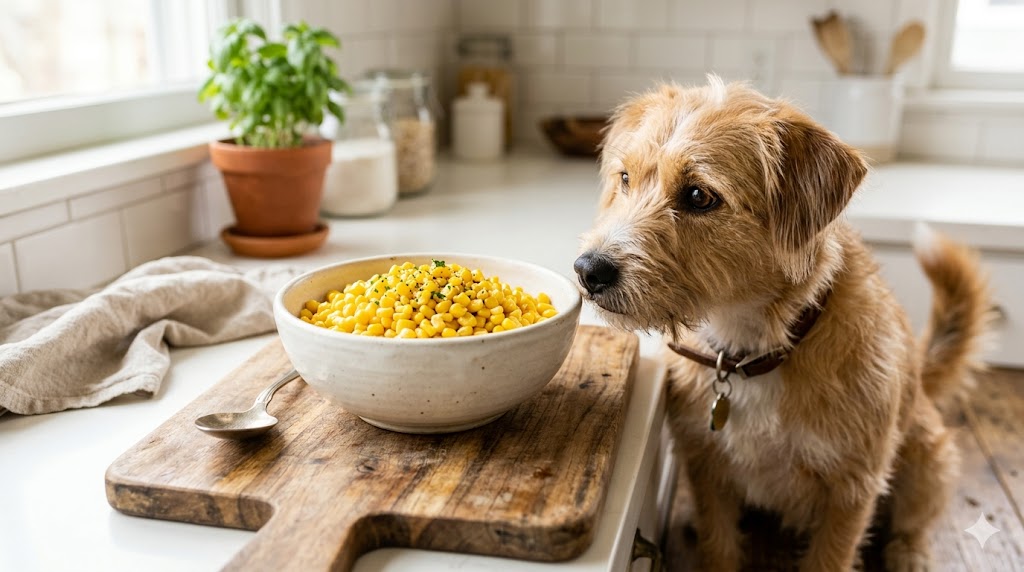
Yes — plain corn kernels off the cob are safe in small amounts. Never the cob (choking + blockage risk), skip canned, buttered, or salted corn.
How much corn can my dog eat?
A 30-lb adult dog needs about 794 kcal/day, so treats should stay under 79 kcal. That's up to about 7 tablespoons of kernels a day as a treat.
A treat limit (10% of daily calories), not a target — assumes an adult dog. Puppies and special diets: use the full calculator.
The calculator's number is the ceiling, not a daily target. AKC's only quantity guidance is the 10% treat rule — combined with all other treats, corn stays under 10% of daily calories. A few tablespoons of plain kernels as an occasional reward fits most healthy dogs.
Is corn good for dogs?
Corn isn't a nutritional empty calorie — AKC notes it's a source of protein, carbohydrates, linoleic acid, and antioxidants, which is also why it shows up as an ingredient in plenty of commercial dog foods. The catch is calorie density: corn is starchier than most veggies (about 108 kcal per 100 g of plain cooked kernels), so portions stay small.
How to serve corn
- Plain cooked or raw kernels off the cob — no butter, salt, sugar, onion, or garlic. Both raw and cooked kernels are safe in small portions.
- Confirm your dog isn't allergic to corn before feeding it for the first time — corn is a known allergen for some dogs.
- If corn is new for your dog, start with a small amount and watch for digestive upset or signs of allergy before making it a regular treat.
What to avoid
- Never corn on the cob — even a few inches of cob can choke a dog or lodge in the intestines and need emergency surgery to remove.
- Buttered or salted corn — high fat can trigger pancreatitis and obesity, and too much salt is its own health risk.
- Corn cooked with onions or garlic — both are toxic to dogs even in small amounts.
- Corn tortillas and corn chips — high sodium, plus additives and preservatives that don't belong in a dog's diet.
- Buttery, salty popcorn — AKC singles out loaded popcorn as unhealthy. Plain air-popped kernels in tiny amounts are a different story, but seasoned movie-style popcorn is not a dog snack.
💡 What next?
Common questions
- Can dogs eat corn on the cob?
- No — never. AKC is explicit: don't share corn on the cob with your dog. The cob itself is the danger; dogs can choke on it, and a swallowed piece can cause a serious intestinal blockage that may need surgery. Always strip the kernels off first.
- Is corn good for dogs?
- In small amounts, yes — AKC says corn is a source of protein, carbohydrates, linoleic acid, and antioxidants, which is why it shows up in plenty of commercial dog foods. It's not nutritionally essential as a treat, but plain kernels off the cob are a fine occasional snack.
- Can dogs eat canned corn?
- Not ideal. Canned corn is usually packed in salt (and sometimes sugar), and PetMD warns that too much salt can cause salt poisoning in dogs. If you only have canned, rinse it well and use a tiny amount — but fresh or frozen plain kernels are the better default.
- Can dogs eat popcorn?
- Plain air-popped kernels in tiny amounts aren't toxic, but AKC singles out loaded popcorn — salt, butter, flavorings — as unhealthy. Unpopped or partially popped kernels can also crack teeth and upset stomachs. Easiest answer: skip movie-style popcorn entirely.
- Can dogs eat corn tortillas or corn chips?
- No — not as a regular treat. PetMD notes corn tortillas are typically high in sodium, and corn chips usually add preservatives and other additives on top. Both miss the bar for a healthy dog snack.
- Can dogs be allergic to corn?
- Yes — corn is one of the known dog food allergens. AKC says to confirm your dog isn't allergic to corn before feeding it. If you've never given corn before, start with a small piece and watch for itching, ear inflammation, or GI upset.
- How much corn can my dog eat?
- Use the calculator above as the ceiling — that's the maximum corn can take of the daily 10% treat budget if it's the only treat that day. AKC's only quantity guidance is 'in moderation,' so think a few tablespoons of plain kernels, not a whole ear.