Can Dogs Eat Bread?
⚠️ In moderation — with a couple of catches
Plain bread is harmless in tiny amounts but adds empty carbs and calories — the real danger is what's baked into it (raisins, garlic, nuts, xylitol) or raw yeast dough that ferments inside your dog's stomach.
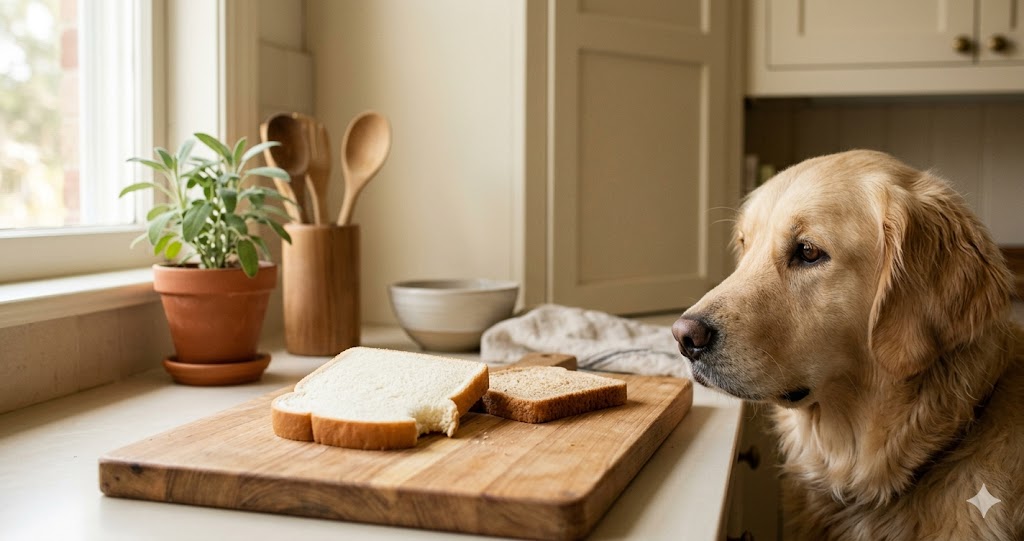
Yes — dogs can eat plain white or wheat bread in small amounts, but bread is really a caution food. AKC and PetMD agree plain bread is safe and basically empty calories with no real nutritional benefit. The serious risks aren't plain bread itself — they're raisin bread (toxic), garlic or onion bread (toxic), nut breads (especially macadamia), xylitol-sweetened breads, and raw bread dough (the yeast keeps fermenting in the stomach and releases ethanol).
How much bread can my dog eat?
A 30-lb adult dog needs about 794 kcal/day, so treats should stay under 79 kcal. That's up to about 1 slice of bread a day as a treat.
A treat limit (10% of daily calories), not a target — assumes an adult dog. Puppies and special diets: use the full calculator.
Bread is empty calories — no nutritional benefit, just carbs. Keep it well under AKC's 10% treats rule. For most dogs that's a torn-off corner of a slice, not a whole slice. If you want something with actual nutrition, almost any safe fruit or vegetable beats bread.
Is bread good for dogs?
Bread has no real nutritional benefit for dogs — AKC says plainly it 'has no nutritional value' and just packs on carbs and calories. Whole wheat is marginally better than white because of fiber, but neither delivers anything your dog isn't already getting from a complete and balanced food. Treat bread as a low-value treat, not a supplement.
How to serve bread
- Plain only — plain white or plain wheat bread, no spices, no raisins, no garlic, no nuts, no seeds, no xylitol-sweetened varieties.
- Skip toppings. No butter, no peanut butter (unless you've confirmed it's xylitol-free), no jam, no honey-and-cinnamon, no garlic spread.
- Occasional treat only — bread doesn't earn a regular slot in your dog's diet. AKC and PetMD both flag bread as nutritionally pointless plus a setup for weight gain if it becomes a habit.
What to avoid
- Raisin bread — RAISINS ARE TOXIC. Even a few raisins baked into a slice can be life-threatening for some dogs. Raisin breads, cinnamon-raisin bagels, hot cross buns, fruit loaf — all off-limits.
- Garlic bread, onion bread, focaccia with onion — garlic and onion are part of the Allium family and are toxic to dogs. Garlic bread smells irresistible to dogs but can cause anemia.
- Nut breads — banana bread with walnuts, pumpkin bread, anything with macadamia nuts. Macadamia nuts are among the most poisonous foods for dogs, and many nut-containing breads also carry the other problem ingredients (raisins, xylitol).
- Xylitol-sweetened bread — some 'low-carb' or 'keto' breads use xylitol as a sweetener. Xylitol is toxic to dogs even in tiny amounts. Read the ingredients label every time before sharing a 'healthy' bread.
- RAW BREAD DOUGH — this is a true emergency. Uncooked yeast dough keeps rising inside a warm stomach, which can distend the stomach AND release ethanol (alcohol) into the bloodstream as the yeast ferments. Call your vet or pet poison control immediately if your dog eats raw dough.
- Bread as a regular daily treat — even plain bread, given habitually, is a fast track to extra weight. PetMD warns that regular bread feeding over time can lead to obesity or diabetes.
💡 What next?
Common questions
- Can dogs eat raisin bread?
- No — raisin bread is dangerous. AKC says raisins (and grapes) are highly toxic to dogs, and even a single raisin can be life-threatening for some dogs. Cinnamon-raisin bagels, hot cross buns, fruit loaves, and raisin scones all count. If your dog eats any raisin bread, call your vet or ASPCA Animal Poison Control immediately.
- Can dogs eat garlic bread?
- No. AKC explicitly warns that garlic bread can cause serious side effects — garlic is part of the Allium family (along with onions, leeks, and chives) and can cause anemia in dogs, with symptoms like pale gums, elevated heart rate, weakness, and collapse. Onion bread and focaccia with onion are off-limits for the same reason.
- What happens if my dog eats raw bread dough?
- This is a true emergency — call your vet right away. Raw yeast dough keeps rising in the warm, moist environment of a dog's stomach, which can dangerously distend the stomach. As the yeast ferments, it also releases ethanol (alcohol) into your dog's bloodstream, which is toxic to dogs. AKC describes raw bread dough as releasing 'toxic levels of ethanol into the bloodstream.'
- Is xylitol in bread dangerous?
- Yes. Xylitol is an artificial sweetener that's harmless to humans but toxic to dogs even in tiny amounts. Some 'low-carb,' 'sugar-free,' or 'keto' breads use xylitol. Always read the ingredients label on any 'healthier' bread before sharing with your dog.
- Is white bread or whole wheat bread better for dogs?
- AKC says plain white and plain wheat bread are both 'generally safe for dogs to eat, provided they don't have any allergies.' Whole wheat has slightly more fiber, but neither delivers nutrition your dog isn't already getting from a complete and balanced food — both are essentially empty calories.
- How much plain bread can my dog have?
- Treat bread like a low-value treat that has to fit inside AKC's 10% rule (treats shouldn't make up more than 10% of daily intake). For most dogs that means a torn-off corner of a slice, not a full slice. AKC's exact framing on bread: it 'has no nutritional value and can really pack on the carbohydrates and calories.'
- Can dogs eat banana bread or pumpkin bread?
- Be very careful — homemade and bakery banana / pumpkin / zucchini breads often contain raisins, walnuts, macadamia nuts, or xylitol, and any of those make the bread unsafe. Plain banana on its own is fine (see our banana page), but baked goods are a much higher risk per bite because they hide multiple ingredients in one slice.