Can Dogs Eat Bell Peppers?
Yes — sweet bell peppers (red, yellow, green, orange) are safe for dogs and a low-calorie, vitamin-packed treat. Red is the most nutrient-dense. The hard rule: NO hot peppers — jalapeños, chili peppers, and cayenne all contain capsaicin and will upset your dog's stomach.
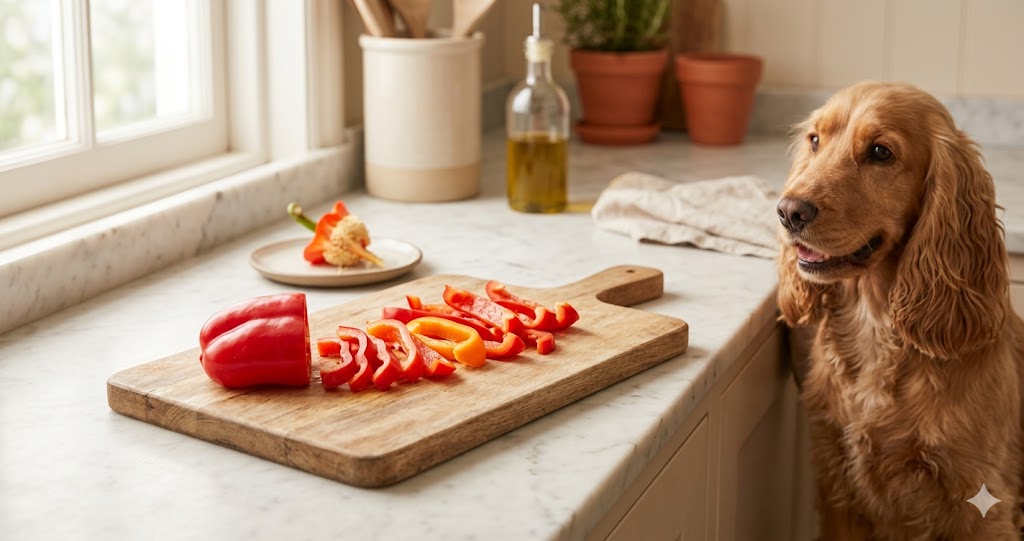
How much bell peppers can my dog eat?
A 30-lb adult dog needs about 794 kcal/day, so treats should stay under 79 kcal. That's up to about 26 bell pepper slices a day as a treat.
A treat limit (10% of daily calories), not a target — assumes an adult dog. Puppies and special diets: use the full calculator.
Bell peppers are low calorie, so the calculator's ceiling is generous — but AKC gives a hard upper bound by dog size: large dogs less than half a pepper, small dogs less than a quarter, at any one time. Stay inside the 10% treat rule and start with a piece or two to make sure your dog's stomach handles it.
Are bell peppers good for dogs?
Bell peppers are packed with vitamins A and C plus beta-carotene and antioxidants — useful for skin, coat, eye, and immune health — and they're low in calories and fat. Color matters: red bells have the most of all the good stuff; green is the least ripe and the least nutrient-dense, but still safe.
How to serve bell peppers
- Wash the pepper, slice it open, and pull out the stem and the seeds before you give any to your dog. Cut into small, bite-size pieces.
- Raw is fine for most dogs. If your dog has a sensitive stomach or trouble chewing the skin, steam or puree it instead — no butter, no oil, no salt.
- Plain only. Skip seasoning, salt, oil, butter, and anything mixed with onion or garlic.
What to avoid
- Hot peppers — jalapeños, chili peppers, cayenne. The capsaicin will give your dog stomach upset, vomiting, or diarrhea. This is the bell-pepper page's #1 rule.
- Spicy peppers in any form — fresh, dried, or as a powder. Even a little capsaicin is enough to cause digestive upset.
- Peppers cooked or stuffed with onion, garlic, salt, oil, or butter — the pepper itself is fine; those add-ons are the problem. Garlic and onion are toxic.
- A whole pepper or big chunks — large pieces are a choking risk for small dogs and the fiber load can cause gas or loose stool. Cut into bite-size pieces and start small.
- Pickled peppers, peppers in vinegar/oil jars, or canned stuffed peppers — too much sodium and almost always seasoning that doesn't belong in a dog's diet.
💡 What next?
Common questions
- Are bell peppers safe for dogs?
- Yes — sweet bell peppers are non-toxic. AKC: they're not toxic, and they're a healthy alternative snack. PetMD: all bell pepper colors (green, red, yellow, and orange) are fine for dogs to consume in moderation. The one thing to be clear about: this is sweet bell peppers only, not jalapeños or chili peppers.
- Red vs green pepper for dogs — which is better?
- Red. AKC: red bell peppers contain the highest amounts of vitamins and antioxidants. Green is the least ripe of the four colors and the least nutrient-dense — still safe, just less of the good stuff. If you only buy one color for your dog, make it red.
- Can dogs eat jalapeños or chili peppers?
- No. PetMD: hot peppers like jalapeños, chili peppers, and cayenne all contain capsaicin, and capsaicin can cause digestive upset, vomiting, and diarrhea in dogs. This applies to fresh, dried, and powdered forms. Stick to sweet bell peppers only.
- Do I need to remove the stems and seeds?
- Yes. PetMD: start by removing the seeds and stems, then slice the pepper into small pieces. Seeds and the woody stem can cause indigestion and aren't worth chewing on. The flesh is the part you want.
- Cooked vs raw bell pepper for dogs — which is better?
- Either works. Most dogs handle raw bell pepper fine. AKC: if your dog has trouble with the skin or has a sensitive stomach, steam or puree the pepper to make it easier to consume and digest. If you cook it, cook it completely plain — no oil, butter, salt, garlic, or onion.
- How much bell pepper can my dog eat?
- The calculator above gives your dog's daily ceiling under the AKC 10%-treat rule. AKC also gives a per-serving cap: large dogs less than half a pepper, small dogs less than a quarter, at any one time. Start with one or two small pieces the first time to see how their stomach handles it.
- Can puppies eat bell peppers?
- Yes, in tiny amounts. Use small bite-size pieces of red or yellow bell pepper, seeds and stem removed, and start with a single piece to test tolerance. Puppies get most of their nutrition from puppy food — bell pepper is a treat, not a supplement.