Can Dogs Eat Almonds?
❌ AKC and PetMD advise against feeding almonds to dogs
No — don't feed almonds to your dog. AKC is direct: "can dogs eat almonds? The answer is no." They're not classified as toxic the way grapes or chocolate are, so a stray almond off the floor isn't an emergency, but they're hard to digest, high in fat (a pancreatitis trigger), a real choking and obstruction risk for small breeds, and salted or seasoned kinds add salt-toxicity on top. If your dog ate one or two, watch them. If they ate more than a few — especially a small dog or salted ones — call your vet.
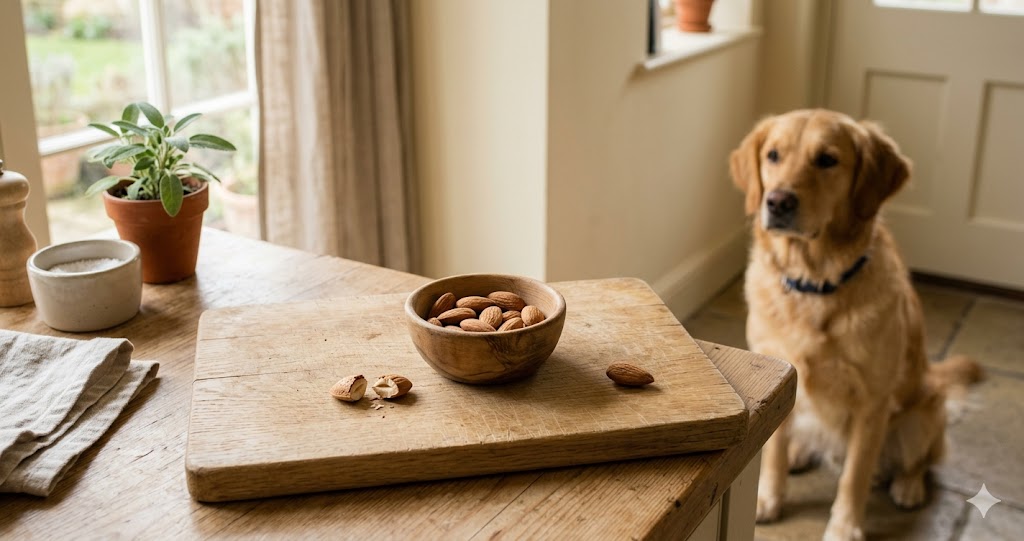
Why AKC and PetMD discourage it
Hard to digest
AKC's first reason almonds aren't recommended is plain digestion. Dogs' digestive systems aren't built for nuts, and even plain almonds can cause stomach upset, gas, vomiting, or diarrhea. That's true whether the almond is raw, dry-roasted, or sliced.
- AKC: almonds are one of those foods dogs can't easily digest.
High fat — pancreatitis risk
Almonds are about 579 kcal per 100g, mostly fat. AKC and PetMD both name fat as the reason most nuts are off the menu for dogs: high-fat treats are a documented pancreatitis trigger, and pancreatitis in dogs can be severe enough to need IV fluids and hospitalization. The risk isn't from a stray nut — it's from making almonds (or almond butter) a regular thing.
- AKC: high-fat nuts put dogs at risk of pancreatitis.
Choking + intestinal blockage
A whole almond is the wrong size and shape for a dog's throat or gut, especially in small breeds. AKC specifically names the esophagus, intestines, and windpipe as blockage sites. This is the part most owners don't think about: it's not the toxicity, it's the physical shape.
- AKC: whole almonds can block a dog's esophagus, intestines, or windpipe.
Salted, seasoned, or coated almonds add salt toxicity
The packaged-snack kinds — salted, smoked, honey-roasted, chocolate-coated — are worse than plain. PetMD flags salt specifically: dogs that eat heavily salted nuts can develop water retention, and in larger amounts, salt toxicity. Chocolate coatings layer on a real toxin. And xylitol shows up in some "sugar-free" snack nuts — always read the label.
- PetMD: heavily salted nuts can cause water retention in dogs.
Better crunchy training treats
If you wanted almonds as a small training treat, plain dry-roasted unsalted peanuts (a single one) hit the same texture without the choking shape, and carrot sticks or apple slices give the crunch with actual nutrition. Each one is on our food checker with the per-dog amount worked out from your dog's weight.
- Carrots: low-calorie crunch that's good for teeth.
If your dog ate almonds — what to watch for
Watch for these symptoms over the next 1–3 days:
If your dog consumes one or two almonds, don't panic. Instead, watch them carefully for signs of or obstruction. If your dog devours more than a few almonds, call your veterinarian or local emergency veterinarian for professional advice.
If your dog grabbed ONE or TWO plain almonds: AKC says don't panic. Watch the next 24 hours for choking, vomiting, diarrhea, or signs of obstruction (lethargy, refusing food, hard belly, retching without producing anything). For a small dog or puppy, watch closer — the same one almond is a bigger share of their gut. If your dog ate MORE THAN A FEW, OR any salted/seasoned/honey-roasted/chocolate-coated kind, OR you're seeing any of those symptoms, call your vet or the ASPCA Animal Poison Control hotline (1-888-426-4435) now. A consultation fee may apply on the ASPCA call. Tell them: how many, plain or seasoned, and your dog's weight.
- ASPCA Animal Poison Control runs a 24/7 hotline — a consultation fee may apply, but they're the standard reference for what's toxic and how serious it is.
💡 What next?
Common questions
- Are almonds safe for dogs?
- No. AKC: "can dogs eat almonds? The answer is no." They aren't classified as toxic the way macadamia nuts or grapes are, but vets uniformly say skip them — hard to digest, high fat (pancreatitis risk), choking shape, and seasonings make the packaged kinds worse.
- What happens if my dog eats one or two almonds?
- AKC: "If your dog consumes one or two almonds, don't panic." Watch them for the next 24 hours for choking, vomiting, diarrhea, or signs of obstruction. If they ate more than a few — especially a small dog, or salted/flavored ones — call your vet or the ASPCA Animal Poison Control hotline (1-888-426-4435).
- Why are almonds bad for dogs if they're not toxic?
- Three reasons stack up. (1) They're hard to digest and can cause gastrointestinal upset. (2) They're high in fat, which AKC and PetMD both flag as a pancreatitis trigger. (3) Whole almonds can block a small dog's esophagus, intestines, or windpipe. Add salt or seasoning on top and you also get salt toxicity risk.
- Can dogs eat almond butter?
- PetMD says almond butter on its own isn't toxic, but most jars contain salt, sugar, or — the dealbreaker — xylitol, a sweetener that's deadly to dogs even in tiny amounts. If you're going to share any nut butter, read the label first and pick a plain peanut butter with no xylitol; see our peanut butter page for the label-check rules.
- Can dogs drink almond milk?
- A small lick after a spill isn't an emergency. PetMD: "A small amount of almond milk is OK for your dog to lap up after a spill, but you shouldn't give it to your pet as a treat." Many almond milks are sweetened or flavored, and dogs don't need plant milks in their diet at all.
- Can puppies eat almonds?
- No. Puppies have a higher choking risk because of their smaller airways, their digestive systems are more sensitive, and high-fat treats are exactly what you don't want during growth. Stick to puppy food and vet-approved training treats — almonds offer nothing a puppy needs.
- My dog ate a handful of salted almonds — what should I do?
- Call your vet or a pet poison line now, especially if it was more than a few. The two layered risks: pancreatitis from the fat load, and salt toxicity / water retention from the seasoning (PetMD flags this as "particularly dangerous in dogs with heart disease"). Don't induce vomiting at home without vet guidance — let the professional walk you through it.